I Hired a Campus Sexual Assault Lawyer in Los Angeles: Here’s My Honest Review

Note: This story mentions sexual assault. I’ll keep it simple, clear, and kind.

Quick backstory (because context helps)

I was a grad student in Los Angeles when I filed a Title IX report. I was scared and tired. My hands shook when I walked into the campus office. I could smell old coffee and that lemon cleaner they use everywhere. It all felt cold.

I didn’t know what to do next. So I hired a campus sexual assault lawyer in Los Angeles. I’ll keep their name private here, but I’ll share what happened and how it felt.

How I found them (and why I stayed)

A student advocate sent me three names. I called all three. One lawyer talked over me. One sent a long email that felt like a form. The third one listened. She asked if I wanted water before I even told my story. That was the one I chose.

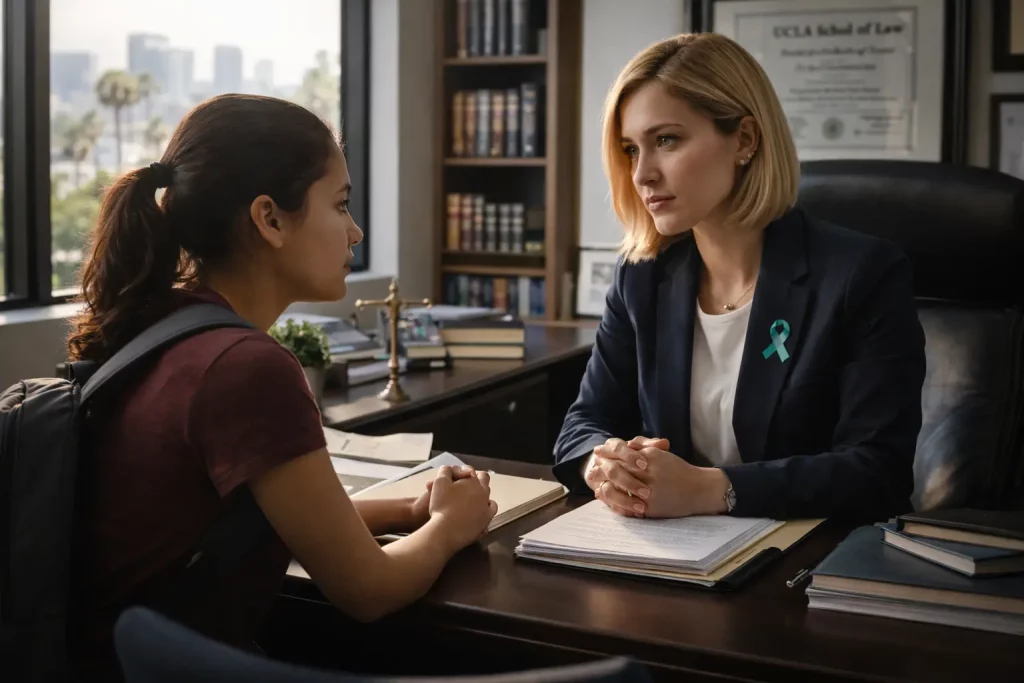
We met near Westwood, in a small office with sun coming in. She said, “You set the pace.” That line mattered. I needed that.

What they actually did for me

This part is what I think most people want to know. What did they do, like, really?

  • Sat with me for the first Title IX interview. She didn’t let the room rush me.
  • Wrote my statement with me. We read it out loud. Twice. We cut the fluff. We kept my voice.
  • Practiced for the hearing. We did a mock run. She played the advisor for the other side. It felt rough, but it helped.
  • Set up a no-contact order with the school. Simple words. Clear steps.
  • Talked with LAPD when I wasn’t ready to. She kept it short. She didn’t push me to file a criminal case before I was ready.
  • Helped me collect phone records, texts, and screenshots. We used a shared folder. Clean names. Easy labels. No chaos.
  • Coordinated with a campus advocate and gave me a list of therapists in Los Angeles. I used one. It helped me sleep again.
  • After the decision, she handled the appeal memo. Three pages. Tight and calm.

You know what? The small things saved me. She brought sticky notes and tea to the prep meeting. She asked for my pronouns each time. She never rolled her eyes at simple questions. That mattered more than I thought it would.

Was I scared?

Oh yes. I kept thinking, “What if I freeze?” She taught me a simple “pause and breathe” move. I used it in the hearing. I felt my feet on the floor. It sounds small. It worked.

Cost talk (because money is a thing)

My case had two tracks: the campus case and some light help with police. Prices can vary, but here’s what I paid:

  • Flat fee for Title IX advising and hearing support
  • Hourly for any police calls and post-decision work
  • Total for me: just under what you’d pay for one used car in decent shape

Could it be less? Maybe. Some lawyers offer student rates or payment plans. Ask. Don’t be shy. I wasn’t, and it helped.

What I loved

  • Trauma-informed and steady. She never rushed. She didn’t make me re-tell details unless it helped my case.
  • Strong prep. We did short drills, not long lectures. I remembered it under stress.
  • Clear notes. After each meeting, I got a short recap in plain words.
  • Boundaries with care. She said, “We can pause if your body says stop.” That line stayed with me.
  • Real results. The school issued a no-contact order right away. The hearing panel took my case seriously. The outcome matched the evidence.

What bugged me (not a deal-breaker, but still)

  • Parking near the office was rough. I was late once and cried in my car. It happens.
  • Weekend emails took longer. During hearing week, I wished for faster replies.
  • Billing was clear, but the final invoice had two lines I asked about. She fixed it, no fuss.

A tiny detour: campus stuff I didn’t know

  • You’re allowed to bring an advisor to Title IX meetings. A lawyer counts as an advisor.
  • You can ask for breaks. Even during tough questions.
  • You can submit evidence in a simple timeline. Screenshots help. Dates matter.
  • After a decision, there’s usually an appeal window. Don’t miss it.

Also, consent doesn’t stop at in-person interactions. If you’re curious about how to share intimate images safely and on your own terms, check out FuckLocal’s “Send Nudes” guide, which offers step-by-step privacy tips, best practices for secure photo sharing, and a community that emphasizes enthusiastic consent.

If you need more survivor-centered guidance, EndCampusSexualAssault.com offers a clear rundown of rights, resources, and next steps you can take right now. UCLA students can also review the university’s dedicated Resources for Complainants page for campus-specific support.

For some survivors, reclaiming agency after trauma involves exploring new, fully consensual experiences on their own timeline. If that journey leads you to seek trans-affirming companionship in a safe, vetted setting, the listings for TS companions in Milton on OneNightAffair provide verified profiles, upfront communication options, and clear boundary-setting tools so you can prioritize comfort and consent every step of the way.

I learned this the hard way. No one tells you these things in freshman week. They should.

Who this is for

  • Students at UCLA, USC, CSUN, LMU, or other LA campuses who want steady help
  • Survivors who want control and calm, not drama
  • Folks who freeze under pressure and need short, simple prep
  • Anyone who wants a no-contact order done right, fast

Students at Los Angeles Valley College can check their Title IX resources for additional on-campus support.

One moment I keep going back to

Right before the hearing, we sat in a hallway with a humming soda machine. She looked at me and said, “You don’t have to rush your answers. Silence is allowed.” I held that line in my head. It slowed time. I answered better.

My result

The panel found in my favor. The no-contact order stayed. There were limits on classes and clubs for the other person. I felt heard. Not fixed, but heard. Healing is slow. But I slept that night.

Final take

Would I hire a campus sexual assault lawyer in Los Angeles again? Yes. I would hire this one again. She wasn’t flashy. She was steady. She gave me steps when my head was foggy.

If you’re on the fence, ask for a consult. See if they listen. See if they speak in plain words. Your gut will know.

Rating: 4.7/5

Small note: If your case is urgent, call the campus Title IX office and a local crisis line too. A lawyer is great, but support comes in layers. And layers help.
Published
Categorized as Law

I Went Looking for Campus Sexual Assault Stats. Here’s What I Found

I didn’t plan on becoming “the stats person.” But my little cousin asked me to help her pick a college. She wanted to feel safe. I wanted facts, not rumors. So I spent a few weeks looking at campus sexual assault numbers. I used the big sources that schools and news folks use. And yes, I took notes like a nerd. If you want the step-by-step version of my data hunt, I laid it all out in a longer piece right here.

You know what? The numbers are heavy. But they help.

What I used (and how I used it)

  • AAU Campus Climate Survey: This is a big student survey from many colleges. I read their summaries and the method notes.
  • Clery Act data: Schools must report certain crimes each year. I went school by school and checked the Annual Security Report and the daily crime log.
  • RAINN: Their pages explain what the numbers mean in plain words. I used them to cross-check rates and reporting patterns.

I also called one Title IX office, just to ask how they log cases. The answer was simple: not every report becomes a Clery number. That matters.

The numbers that hit me

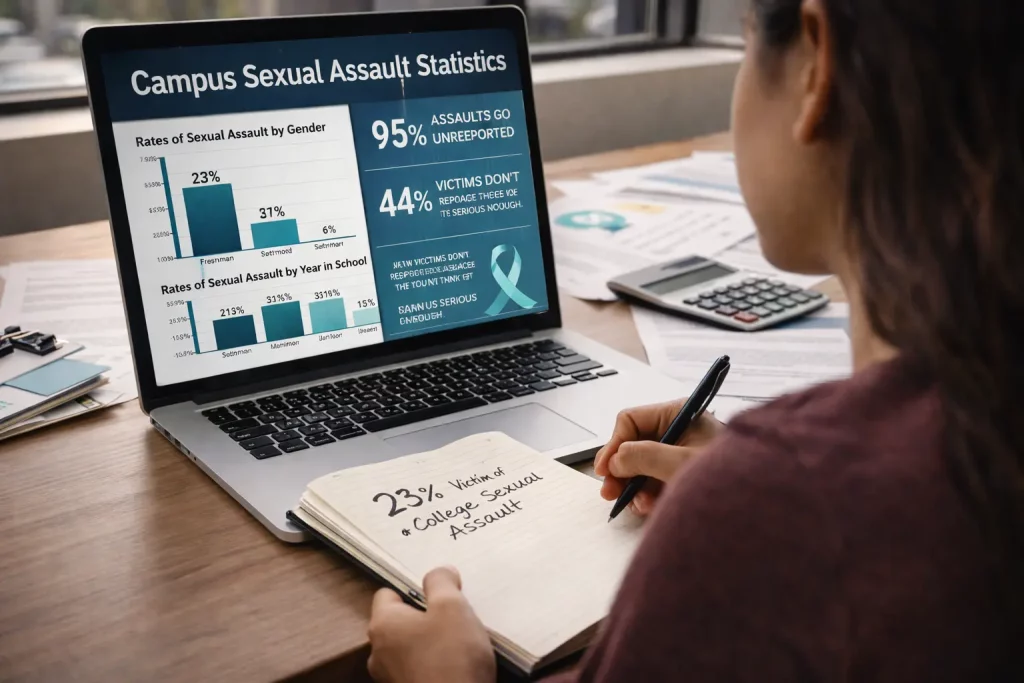
  • About 1 in 4 undergraduate women say they faced sexual assault or contact without consent. Surveys like AAU say this.
  • For undergraduate men, it’s about 1 in 14.
  • For trans, nonbinary, and gender-diverse students, it’s close to 1 in 4.
  • Most students don’t report to police. RAINN says only about 1 in 5 student victims tell law enforcement.

So when I saw a college list “two rapes” in a year, I didn’t cheer. I asked, does that match the survey rates? Usually, it doesn’t. And that gap tells a story.

A week that said a lot

One small thing stood out. I watched a daily crime log during September. More entries popped up near the start of fall. RA training talks about this “Red Zone,” the first weeks when risk goes up. Those logs echoed that pattern. Fewer entries in July. More in early fall. It wasn’t loud data, but it felt real.

Why the numbers don’t line up

Here’s the thing. Clery numbers and survey numbers are not the same kind of number.

  • Surveys ask students what happened to them, on or off campus, even if they never told anyone.
  • Clery counts crimes in set campus areas and only when someone reports in a way that fits the rules.
  • Terms differ. “Rape” in Clery has a legal frame. Surveys ask about actions, like “someone did X without consent.”
  • There’s lag. Reports can take months. Some never get logged at all.

So yeah, a big school can report single digits for a year. And the survey can still say “1 in 4.” Both can be true at once.

Real examples that helped me compare

  • AAU surveys show high rates across many campuses, year after year. About 26% of undergrad women and around 6–7% of undergrad men report assault or sexual contact without consent.
  • RAINN points out the low reporting rate to police for students. About 20%.
  • Clery reports often list very few rapes each year, even at large schools. They also include fondling, dating violence, domestic violence, and stalking, but the totals still look small next to survey rates.

I used those three facts together when my cousin asked, “Is this campus safe?” I didn’t say yes or no. I said, “Let’s look at all three and then ask what support this school gives.”

What helped me, beyond the numbers

I liked when a school had:

  • A clear, easy page on how to report and what happens next
  • A 24/7 line that led to a real person
  • Annual training that wasn’t just slides
  • Climate surveys posted, not hidden
  • A map or note on what areas count as “campus” for reports

Even an anonymous chat tool like InstantChat offers secure, on-demand messaging that campuses can embed on their support pages so students can connect with trained advocates without having to make a phone call.

One resource that helped me translate policies into plain-language action steps is EndCampusSexualAssault.com, which gathers reforms, survivor stories, and campus tools in one place.

For transgender and gender-diverse students who sometimes look off campus for community or social opportunities, having vetted, identity-affirming listings matters just as much as on-campus support. A thoughtfully moderated directory such as TS escort Taunton provides verified profiles, clear safety guidelines, and user reviews that can help adults make informed, boundary-respecting choices before meeting someone in person.

Where the data fell short

  • It’s hard to compare schools fairly. One campus might report more because folks trust the system. That can look “worse” on paper when it’s actually a sign of trust.
  • The daily crime log uses formal labels. Students don’t talk that way. It can feel cold.
  • Some reports get reclassified. Some get dropped. It’s a lot for a family to parse. For students considering legal counsel when campus processes feel overwhelming, I found this honest review of hiring a campus sexual assault lawyer in Los Angeles surprisingly clarifying.

Honestly, I got frustrated. Then I took a breath and kept reading.

Quick tips if you’re reading these stats for someone you love

  • Look at three buckets: survey rates, Clery reports, and support services.
  • Check the “Red Zone.” Ask how the school staffs those first six weeks.
  • Ask the Title IX office how they track reports and what “confidential” means on campus.
  • Scan the daily crime log for trends, not just the total.
  • Read the student paper. Real stories add context the numbers miss.

My take, plain and simple

Do the numbers scare me? A bit. But they don’t make me give up on college life. They make me ask better questions.

Here’s my simple rule: Surveys tell you how common harm is. Clery tells you what got logged where. Services tell you how a school shows up when it counts.

Put those three together, and you get a picture that’s closer to the truth. Not perfect. Closer.

And if you’re reading this while packing for fall? Keep the hotline numbers saved, go to the training, set up buddy plans, and know your routes home. Safety isn’t one big move. It’s a stack of small ones—done early, done often, done together.

That’s what I learned, and it stuck.

Published
Categorized as Law

I Read Campus Sexual Assault Stats So You Don’t Have To: My Honest Take

I’m Kayla, and I used campus sexual assault stats a lot in college. I used them to plan, to ask hard questions, and to help friends. Sounds cold, right? Numbers and pain don’t mix well. Still, they matter. They shape budgets, training, and what gets fixed. I even turned the whole journey into a longer piece—I Read Campus Sexual Assault Stats So You Don’t Have To—for anyone who wants the deep dive.

You know what? The numbers told me one story. People told me another. I learned to hold both.

What the numbers actually say (real examples, not fluff)

  • National campus surveys have said this for years: about 1 in 5 undergraduate women experience sexual assault or attempted assault in college. Rates for LGBTQ+ and trans students are higher. Men are harmed too—less often, but not rare.
  • Most students don’t report to police. Think “a small slice” does. Groups like RAINN have shown this pattern again and again.
  • The official campus crime log (that Clery Act report) almost always shows way fewer cases than surveys. It’s not fake. It’s just different.

Sometimes, trans and gender-nonconforming students tell me they feel safer stepping outside the campus dating scene entirely and choosing vetted, adult-only options where boundaries and consent are spelled out up front. For anyone near southern Massachusetts who’s curious about that route, you can browse profiles and safety guidelines at TS Escort New Bedford—the page lists verified companions along with community reviews so you can make an informed, low-pressure choice.

RAINN’s detailed rundown of national campus sexual violence statistics offers even more context, while the Clery Center’s concise explainer on the Clery Act helps clarify why the official log can look so different from student surveys in the first place.

Whenever I presented the “1 in 5” number in a classroom or senate meeting, someone would eventually ask whether it’s really all about “testosterone” or “boys being boys.” That kind of biological shorthand isn’t an excuse, but it is a talking point worth unpacking. For anyone who wants to see what the science actually says, check out Does testosterone make you better in bed? — the article breaks down peer-reviewed studies on hormones, performance, and consent so you can separate myths from evidence.

Here’s the thing: I saw this gap up close. If you want the step-by-step of hunting down those numbers, I Went Looking for Campus Sexual Assault Stats—Here’s What I Found spells it out.

  • At my big state school, one year’s Clery report showed only a handful of “forcible sex offenses.” But our campus climate survey, that same year, said a lot of students had unwanted sexual contact. Like, a double-digit percent of undergrads. Same campus. Same year. Very different counts.
  • My friend’s tiny liberal arts college posted zero that year. Zero. But their student-led survey found multiple incidents, plus lots of harassment and coercion. The school wasn’t lying; their rules only counted certain cases, in certain spots, in a set time window.

So does zero mean “safe”? No. It might just mean “not reported the way the form needs.”

Why the gap is so wide (and why it made me mad)

I was annoyed, then I learned the fine print.

  • Definitions: A survey might ask, “Did someone touch you without consent?” The crime report might only log specific legal categories.
  • Where it happened: Off-campus house party? It may not show in the campus report.
  • Timing: Numbers often lag a year or more. By the time they land, the senior who did the harm might be gone.
  • Fear: Some students don’t report. They don’t want the emails, the meetings, or the looks in class. I get it.

It’s not an excuse. But it explains the “Why does this chart feel so small?” feeling.

How I used these stats in daily life

I treated the stats like a weather report. Not perfect, but useful.

  • I checked the trend lines, not just one year. One spike can be better reporting, not more harm. Weird, right?
  • I looked at time and place. Events after big game days. Certain dorm clusters. Patterns help you plan your routes, your buddy system, your rides.
  • I brought the data to student senate. We asked for better lighting by the library, and more RA training. The school said yes once we showed the pattern.

Small note: blue light phones look cool, but they’re not magic. I saw more impact from survivor-centered training, clear reporting paths, and sober monitors at big events.

What worked… and what bugged me

What I liked:

  • Transparency dashboards. Easy charts. Filters by year. I love a clean dataset.
  • Climate surveys run every two years. You can see if consent workshops matter.
  • Anonymous reporting options. More people speak up when the door is low-friction.

What bugged me:

  • Jargon. Words like “nonconsensual contact” mean five different things to five people.
  • Delays. Data from last year doesn’t help me walk home tonight.
  • No nuance. Queer and trans students often face higher risk, but some reports hide that in a footnote.

I’ll say it twice for emphasis: the numbers aren’t lies, but they’re not the whole truth either.

Real moments that stuck with me

  • A teammate told me she didn’t report because she didn’t want the title “victim” on paperwork. She still wanted counseling. The Clery report stayed low. Her pain didn’t.
  • A professor added a one-minute “Resources” slide to every syllabus. Calls to the campus support center jumped that week. The stats later ticked up. People whispered, “Is it getting worse?” No. We were finally seeing it.
  • Our Title IX office changed the intake form. It used simpler language and listed options clearly. More students came in. Meetings felt kinder. That small edit mattered.

If you’re reading your campus data, try this

  • Scan the climate survey first. It’s closer to lived experience.
  • Then check the Clery report. Look for trends, not single-year dips.
  • Ask how they define terms. Ask where “off-campus but student” cases go.
  • Look for resources: 24/7 line, confidential advocates, academic help, housing moves.
  • If you can, push for quick summaries in plain language. Charts help; clear words help more.

One more step: for campus change guides, End Campus Sexual Assault offers clear action plans and survivor-centered resources.

My bottom line

Campus sexual assault stats are like a map at dusk. You can see the road, but not every curve. Use them anyway. Pair them with real voices, survivor-led groups, and the quiet things people tell you after class.

I wish the numbers were cleaner. I wish fewer people had stories. But here’s my review, if you want it straight:

  • Use climate surveys to understand risk.
  • Use Clery reports to spot patterns and hold leaders to promises.
  • Use both to ask for better training, faster timelines, and clear paths to care.

Need legal backup? I Hired a Campus Sexual Assault Lawyer in Los Angeles—Here’s My Honest Review breaks down how that process works and what to expect.

Do the numbers fix it? No. Do they help us aim the light? Yes. And sometimes, that’s enough to get the next thing right.

Published
Categorized as Law

I Hired a Campus Sexual Assault Attorney in Washington, DC — Here’s My Real Story

I’m Kayla. I’m a grad student in DC, and I never thought I’d need this kind of help. But I did. And I’m glad I asked for it. I later discovered that I wasn’t the only one—another student’s account of hiring a campus sexual assault attorney in Washington, DC echoed so much of what I felt.

Why I needed help (and fast)

Something happened after a campus event. I felt scared, small, and lost. I couldn’t sleep. Noise on the Metro made me jump. Even email felt hard. Reading a straightforward breakdown of campus sexual-assault statistics reminded me that what happened wasn’t rare—and that I deserved support.
Campus hate crimes and sexual-violence incidents spiked last year, according to the university’s annual crime report, which made the need for action feel even more urgent.

I told my friend. Then I called a campus counselor. She said, “You can talk to a Title IX lawyer.” I didn’t know where to start, so I googled around and found a DC attorney who works on campus cases. One of the clearest resources I came across was the End Campus Sexual Assault site (EndCampusSexualAssault.com), which lays out students’ rights in plain language. I’ll keep her name private here, but I’ll tell you what she did. Because that’s what helped.

First meeting: clear, calm, not weird

Her office was near Dupont Circle. I took the Red Line. My hands shook so bad I spilled water on my jeans. She didn’t rush me. She said, “You’re in charge.” She talked me through choices:

  • School process (Title IX)
  • Police report (if I wanted)
  • No-contact orders
  • Safety steps on campus

She used some legal words, sure, but then she translated them. Plain words. Lots of pauses. You know what? That part mattered.

What she actually did for me

This is the piece I needed to hear when I was searching at 2 a.m. So here’s my list, with real stuff:

  • Wrote the email to the Title IX office, with me, line by line. We hit send together.
  • Got a no-contact order from the school within a day. The person couldn’t reach me, in class or online.
  • Helped me ask for housing and class changes. Two classes moved to Zoom for a bit. She even drafted a one-paragraph note for my professors.
  • Prepped me for the school interview. We did a practice run with questions. She reminded me to breathe and take breaks.
  • Cut my six-page statement down to two pages. Clear, not cold. I kept my voice.
  • Came to the hearing. She didn’t speak for me, but she sat there, steady, with a legal pad and peppermint tea.
  • Explained “standard of proof.” She said the school uses “more likely than not.” Not 100%. Just more likely. That helped my brain settle.
  • Filed for a Civil Protection Order in DC Superior Court when a friend warned me he showed up near my building. The judge gave a temporary order. It lasted 12 months.
  • Helped me save proof. Screenshots. Dates. Even a timeline in Google Docs. We color-coded it (yellow for school, blue for court).
  • Told me it was okay not to tell every detail to every person. Boundaries are legal too, she said. I cried and believed her.

When she walked me through saving screenshots, the conversation shifted to how online exchanges—even ones that start out as playful—can become evidence if lines are crossed. If you’ve ever wondered where flirting ends and pressure begins, this practical sexting-dating primer lays out simple consent rules and screenshot-worthy red flags that could help you navigate the digital side of campus dating.

At the same time, some survivors find that reclaiming agency over their own intimacy means exploring experiences completely outside the college bubble. Looking at how professional companions structure consent can be eye-opening—check out this profile of a TS escort in Douglasville for a real-world example of clear boundaries, upfront communication, and mutual respect that’s spelled out before any meet-up, which can help you visualize what healthy, negotiated adult interactions look like.

How it turned out

The school found him responsible. He was suspended for a year. I got the no-contact order kept in place. The DC court order stayed, too. I still had bad days, but I slept again. I went back to the gym. I stopped scanning every face on the train.

Not every case ends like this. I know. But I felt heard. And safe enough to keep going.

What I liked (and why it stuck with me)

  • Fast action. She replied to emails the same day, most times in a few hours.
  • Trauma-aware. She never pushed pace. I set it.
  • Practical help. Not just law talk. Real steps: safety plan, class notes, scripts for admin calls.
  • Local know-how. She knew my campus process and the DC court flow. No guessing.
  • Plain speech. No fluff. No scare tactics.

What I didn’t love

  • Cost. The retainer was $4,500, and the hourly rate was $350. She did offer a payment plan, which helped.
  • Weekends were slower. One Sunday reply slipped to Monday afternoon. I panicked. She apologized and called me right away.
  • Paperwork fatigue. Forms, forms, more forms. She handled most of it, but it still felt heavy.

Little things that mattered more than I expected

  • She brought a small snack pack to the hearing (crackers and ginger candy). I could eat something without thinking.
  • She kept a spare sweater in the office. The AC was freezing. That sweater was like armor.
  • She used the phrase “You’re not a problem to solve.” I wrote it on a sticky note.

If you’re wondering “Do I need a lawyer?”

You don’t have to decide today. But a consult can help. You can ask:

  • Can you explain my school’s process in plain words?
  • How do we get a no-contact order?
  • What happens if I want to pause?
  • What will this cost, for real?

And if you’re scared of not being believed—yeah, me too. My attorney didn’t make promises. She made a plan. That felt better than promises.

For students in DC

DC is busy and loud. But the system has doors. Title IX offices. Campus advocates. DC Superior Court for protection orders. Hospitals with trained nurses. If you’re the kind of person who needs numbers before making a move, here’s what another deep dive into the stats uncovered. You don’t have to use all of it. You can pick what works for you, and in what order.
National research shows that college women still face higher rates of sexual violence than their non-college peers, so leaning on the resources around you isn’t overreacting—it’s protecting yourself.

My lawyer kept saying that. It stuck.

Final take

I wish I never needed this. But I did. Hiring a campus sexual assault attorney in Washington, DC, gave me back my footing. Not magic. Just steps. Some hard, some small. But mine.

If you’re where I was—lost in tabs, worn out, staring at the ceiling—please take one step. Ask for a consult. Tell a friend. Write down one date. Drink some water. Then take the next step when you’re ready.

I’m still me. Maybe a little more steady now. And that’s worth it.

Published
Categorized as Law

My Honest Take: A Campus Sexual Assault Law Attorney in San Diego, CA

I’m Kayla, and this is my story. It’s not easy to write. But it might help someone. I’m a grad student in San Diego. When my campus case started, I felt small, scared, and so tired. I needed someone who knew the rules and could speak when I froze.

Why I looked for help

One night, I sat on my floor with my laptop and cold coffee. You know that feeling when your chest gets tight and your brain won’t stop? That was me. I searched for a campus sexual assault attorney in San Diego. Reading others’ experiences helped me decide; for example, this candid look at working with a San Diego campus sexual assault law attorney showed me what real support can look like. I called three numbers. One called back fast. She offered a free 30-minute consult. I said yes. Honestly, I just needed a calm voice.

The first meeting (and the whiteboard)

We met at her office near Balboa Park. The AC was loud, the chairs were squeaky, and I was shaking. She brought water and tissues. No fuss.

She pulled out a small whiteboard and drew the steps:

  • Report filed
  • Evidence window
  • Hearing (with an “advisor” — that could be a lawyer)
  • Outcome letter
  • Appeal (maybe)

She used simple words. She explained Title IX as “the school’s process,” and criminal court as “a separate track.” That helped me breathe. She asked about safety and got the ball rolling on a no-contact letter the same day. She also suggested I tell one professor. She even gave me a short email script so I didn’t have to find the words.

If you’re trying to wrap your head around how California schools handle sexual assault complaints, the student-focused FAQ from the state attorney general’s office is a clear, plain-language guide (source).

What she actually did for me

Real things, not fluff. Here’s what stands out.

  • She set up a “drop box” folder and taught me to save screenshots with time stamps in the file names (like “2024-02-14_10-21_PM_text.png”). Sounds small, but it saved hours.
  • We built my timeline on a Sunday in a tiny conference room with bad lighting and a loud vent. She brought sticky notes and sorted them by date. I cried once. She paused, then kept pacing the work so I didn’t feel rushed.
  • She wrote a short letter to the investigator asking them to add three messages I missed. One was a group chat post I forgot to include. That mattered.
  • She served as my advisor at the hearing in March. She handled questions with a calm tone. No drama, no tricks. Just facts. I watched her check her notes, slide me a sticky note, and nod. It felt like a shield.
  • After the first result, she drafted an appeal. She cited “procedural error” and “new evidence” (a date error by the investigator and one file that was mis-tagged). The appeal got reviewed, and the school adjusted the outcome. I’m keeping the details private, but I felt seen. I slept for the first time in weeks.

The little help that didn’t feel little

She emailed the Title IX office to ask for “supportive measures.” That meant:

  • Switching my lab section so I wasn’t in the same room as the other person
  • A short deadline extension on one paper
  • Help with campus escort after dark for two weeks

These sound simple, but they gave me space to heal. And honestly, that’s what I needed.

Many schools outline these protections in their public Title IX policies—for example, see how the San Diego Unified School District explains supportive measures and student rights (source).

What I didn’t love

Nothing is perfect. A few things bugged me.

  • Parking near the office? Chaos. I fed a meter every hour and still got a warning once. If you can, take the trolley or rideshare.
  • One Friday night, I sent a panic email. She replied Monday. I get it — boundaries — but the wait hurt. Next time I’d ask about emergency hours.
  • She used more legal terms in one meeting than my brain could hold. I stopped her and said, “Plain words, please.” She adjusted. But I had to ask.

I later came across a Los Angeles student’s review of hiring a campus sexual assault lawyer and noticed many of the same ups and downs.

Money talk (because it matters)

She asked for a $3,000 retainer. Her rate was $350/hour. She billed in 6-minute blocks. Emails counted. The hearing day had a flat piece so I didn’t stare at the clock. She gave a small student discount on one prep session. Each invoice showed the date, time, and task. No weird surprises.

It added up. I won’t lie. But I also won’t pretend the help wasn’t worth it. Peace of mind has value.

A small San Diego moment

We did one prep at a North Park coffee shop. The barista spelled my name wrong, again. We laughed. She used napkins to map the hearing flow. Sticky notes. Pens. Too much noise. But you know what? I felt stronger walking out.

Who this kind of attorney helps

  • Students who need help with the campus process (Title IX)
  • Survivors who want clear steps and a steady voice
  • Anyone who freezes in hearings and needs an advisor who can question and keep calm

If you have a police case too, ask about getting a separate criminal lawyer. Two tracks. Different rules.

A few tips I wish someone told me

  • Keep a simple timeline doc with dates, places, and who was there.
  • Save screenshots with times in the file name. Put them in one folder.
  • Ask for a written scope: what they’ll do, what they won’t, and how they bill.
  • Bring a trusted friend to one prep session if you can. A kind face helps.
  • Ask the school for supportive measures early. Even small ones matter.

If you study on the East Coast, you might relate to this real story from a student who hired a campus sexual assault attorney in Washington, D.C.—different city, same need for steady guidance.

Students who decide to spend a semester or year abroad often ask how to navigate dating safely in a brand-new environment. If you’re heading to western France and want a feel for the local hookup culture, take a look at this detailed guide to casual dating in Nantes—it breaks down consent expectations, local etiquette, and practical safety advice so you can meet new people without compromising your boundaries.

For readers who might find themselves interning or doing research near Detroit and are curious about trans-friendly nightlife options in the suburb of Novi, consider checking the curated listings at TS Escort Novi—the page features verified profiles, clear photos, and contact guidelines that can help you arrange a safe, discreet encounter with confidence.

My bottom line

I felt scared and stuck. This San Diego attorney didn’t fix my whole life — no one can — but she gave me structure, voice, and a plan. She made a hard process more human. I’d call her again. I’d also ask even more questions up front.

To explore additional resources and learn about preventing and responding to sexual assault on campuses nationwide, visit End Campus Sexual Assault.

If you’re reading this late at night with that tight-chest feeling, I see you. You’re not weak for asking for help. You’re smart. Take the next small step. Then the next. And breathe.

Published
Categorized as Law

My Honest Take: Sexual Assault on College Campuses

Note: This story talks about sexual assault. Take care while reading.

I loved my campus. I also didn’t feel safe there sometimes. Both can be true. College felt big and bright, with game days and late labs and line cooks who knew my weird omelet order. And yet, when the lights went low on a Friday, a lot changed. You feel it in your shoulders. You walk faster. You hold your keys. You check your phone, again.
Federal resources spell out just how common these experiences are; the Office on Women’s Health summarizes key facts about college sexual assault here.
For readers wanting an even fuller version of my story, I once put it all together in my honest take on sexual assault on college campuses if you need every last detail.

Here’s the thing: I used the systems schools set up. I didn’t just read a flyer and nod. I called SafeRide. I walked a friend to the Title IX office. I sat through bystander training and actually used it at a party once. So this is my review—what helped, what didn’t, and what I wish someone had told me on day one.
Before writing this, I devoured every number I could find, and this breakdown of campus sexual assault statistics captures the reality better than most spreadsheets.
Recent national data compiled by the nonprofit RAINN also highlight how pervasive campus sexual violence remains, with detailed figures available here.

Night Life, Blue Lights, and That One Long Wait

Most nights were fine. I’d leave the engineering lab at 11 p.m., backpack heavy, brain fried. I used SafeRide a lot. Good program. The drivers were kind. One offered water and a dad joke. Felt nice.

But one night, it took 40 minutes. The dispatcher kept saying, “You’re next.” I stood by a Blue Light pole near the library. It flickered, then went dark. I took a photo and sent it to maintenance. They fixed it the next week and even emailed me thanks, which felt human.
If you’re a numbers person, here’s what a deeper search for campus sexual-assault stats revealed about lighting, location, and reporting.

  • SafeRide: 4/5. Helpful, but the wait times can stretch when you’re already scared.
  • Blue Lights: 3/5. Great idea. Needs steady upkeep and better lighting around them.

Small tip: I started screenshotting my ETA and texting it to my roommate. We had a rule—“Home?” “Home.” Simple. It helped.

The Title IX Office: Slow Steps That Feel Heavy

My friend—let’s call her M—reported an assault after an off-campus party. No messy details here. Just the facts. She wanted a no-contact order and support with classes. The office did offer both. That part worked. But the process? Long and draining.
Some students in similar situations consider legal counsel; for context, here's an honest account of working with a campus sexual assault law attorney in San Diego.

In the first meeting, someone mispronounced her name twice. Not a big deal to some, but to her, it felt like being missed. The hearing took months. She kept retelling the story. Each time, it pulled her back. They asked for exact times, what songs were playing, who saw what. It’s policy, I know. Still hard.

What helped: The advocate from the campus care center. She sat with M, took notes, and asked, “Do you need water? A break?” Warmth matters.

  • Title IX process: 2.5/5. Clear steps, but the pace and tone can hurt. Survivors need choice and rest built in.
  • Interim measures (no-contact orders, class changes): 4/5. These were quick and useful.

By the way, professors were a mixed bag. One said, “Take the time you need.” Another asked for proof, twice. I wish the school trained all faculty the same way.
An acquaintance of mine documented her experience hiring a campus sexual-assault attorney in Washington, D.C. and it showed me how outside counsel can sometimes cut through campus red tape.

Bystander Training: Green Dot Actually Helped

I took Green Dot. Two hours. Free pizza. Yes, I went for the pizza, but I stayed because the role-play was real. We practiced “distract, delegate, direct.” Simple tools.

I used it at a crowded house. A girl looked stuck against a wall, eyes flat. I walked up and said, “Hey! Your ride’s here,” even though I wasn’t her friend. She grabbed my hand like it was a rope. We got out on the porch where it was cool and loud in a better way. I asked, “Do you want water?” She nodded. Later, I texted the host about what I saw. He apologized and cut the music early. Small wins count.

  • Green Dot: 4/5. Not perfect, but it gave me a script when my brain froze.

Dorm Life, RAs, and The Meeting No One Wants

Our RA did a session with the It’s On Us campaign. Free bagels pulled folks in; I’m not judging. The video was short and fine. But the best part was the circle talk after. One person shared how they walk friends home in pairs after football games. Another said they use a code word in the group chat when a date feels off.

Then time ran out. The Q&A got cut so staff could collect sign-in sheets. That felt like a checkbox moment. A shame.

  • RA sessions: 3/5. Good heart. Needs more time and less paperwork.

Campus Police and Real Talk

Campus police were helpful when called for an escort. They walked my friend across the quad at 2 a.m. No attitude. But I heard stories where folks felt blamed. “How much did you drink?” That line lands hard. It shifts the weight to the person who’s already carrying too much.

  • Escorts: 4/5. Quick when they came.
  • Trauma language: 2/5. Words matter. Train, then train again.

What Worked vs. What Fell Short

What worked for me:

  • SafeRide and escorts when they were fast
  • No-contact orders and class help
  • One great advocate who listened
  • Green Dot skills in a crowded room

What fell short:

  • Long timelines that keep people stuck
  • Cold language in hot moments
  • A few broken lights and quiet paths
  • Events that count attendance more than voices

If I Ran This Show for a Year

  • Cut case times by half. Set clear clocks and share updates weekly.
  • Let survivors choose: written statement, video statement, or live. No forced repeats.
  • Train everyone—faculty, police, student leaders—on trauma basics. Practice the words out loud.
  • Fix lighting, test Blue Lights weekly, and publish the maintenance logs so we trust it.
  • Pay student advocates. Emotional labor is still labor.

What I Tell First-Years (I Tell Their Parents This Too)

  • Save the SafeRide number. Take a photo of the last four digits. Tape it in your wallet.
  • Use a group chat rule: “Home?” “Home.” No joke replies to that one.
  • Keep a code word. Mine was “pineapple.” It meant “call me now.”
  • Wondering which dating apps build in strong safety checks? For a quick primer, read this in-depth Zoosk review to learn how profile verification, photo moderation, and other features aim to make digital dating safer for students venturing beyond the campus bubble.
  • If something happens, you can go to the campus health center and ask about a SAFE exam. You can bring a friend. You can say no at any point.
  • Curious about outside legal help? This honest review of hiring a campus sexual assault lawyer in Los Angeles breaks down costs, expectations, and results without the jargon.
  • RAINN has a 24/7 hotline at 800-656-HOPE. You can call. Or not. You’re still you.
  • For students at Eastern Michigan or anyone spending time near Ann Arbor who prefers to meet companions in a more structured, screened setting, you can explore transgender-friendly professional companionship through One Night Affair’s TS escort listings in Ypsilanti where each profile includes verification details, safety tips, and clear communication guidelines to help you stay in control of your boundaries and schedule.
  • For broader advocacy resources and ways to take action, check out [EndCampusSexualAssault.com](https
Published
Categorized as Law

Campus Sexual Assault Compensation: What Actually Paid For What (My Story)

This talks about assault and money. I’ll keep it plain and kind.

Another survivor breaks down her own pay-for-what experience in this compensation case study.

I was a sophomore at a big state school in the Midwest. It was fall, near midterms. My dorm smelled like ramen and dry shampoo. After the assault, bills piled up. Therapy. Rides. Lock changes. A hotel for two nights. I didn’t think I’d be counting receipt lines while also trying to sleep. But that’s how it went.

Here’s what I used, what paid, what didn’t, and how it felt. I’ll share real numbers from my case. Yours may look a bit different. But the pattern is pretty common.

The Big Buckets I Needed Help With

  • Therapy bills
  • A safe place to sleep for a couple nights
  • Rides, because buses felt scary at night
  • Lock change and a room move
  • A missed paycheck from my campus job
  • A gross ER bill for an exam I didn’t want, but needed

Simple list, but each one triggered a mess of forms. And feelings.

State Victim Compensation Program — Paid Most of My Therapy

What it is: A state fund for victims of violent crime. They can pay for therapy, medical costs, and some lost wages. You don’t sue anyone for this. It’s more like insurance from the state.

What I got: $4,200 toward therapy over a year, plus $312 for lost wages (two missed campus shifts). I later got $118 back for an ER facility fee I paid.

What it needed from me: A police report or similar proof. I didn’t file right away. I had a Title IX report instead. My advocate sent a letter. We added notes from my counselor. It got approved. It took 4 months from start to first check. That wait felt long.

How it felt: Cold at first. Forms. Codes. But it helped the most. Therapy kept me going. The check came right when my savings ran dry.

Would I use again? Yes. 8/10. Slow but real.

Tip: Save receipts. Even Uber screenshots. Date, time, amount. I kept a simple folder on my phone. That moved things faster.

If you want to see an official breakdown of what these programs will reimburse, the Pennsylvania Victims Compensation Assistance Program lists covered expenses in detail, and the Wisconsin Department of Justice Crime Victim Compensation Program offers another clear example of benefits available to survivors.

Campus Emergency Fund — Fast Money for Safety Stuff

What it is: My university had a student emergency fund. Student Affairs handled it. Some schools run it through a Dean of Students office.

What I got: $750. Same week. It paid for a two-night hotel, two Ubers, and a heavy door lock. The housing office moved me to a new room for free. That part wasn’t cash, but it helped a ton.

What it needed from me: A one-page form and a quick meeting. I didn’t have to say his name. My Title IX intake note was enough.

How it felt: Kind. Human. I cried in that office. They handed me a tissue and said, “We’ve got you.” You know what? Sometimes the small stuff sticks in your head.

Would I use again? Yes. 9/10. Fast, flexible, low drama.

Tip: Ask your Title IX office or a victim advocate where this fund lives. It’s often quiet, but it’s there.

Hospital SANE Exam — Covered, But Watch The Facility Fee

What it is: A Sexual Assault Nurse Exam (SANE). It documents injuries and collects evidence. You can do it even if you don’t want to report yet.

What I paid: $0 for the exam itself. A state program covered it. But I still got a $118 facility fee. Yep. I wasn’t happy either. My advocate helped me appeal it. The state fund reimbursed me later.

How it felt: Hard. Bright lights. A very calm nurse. I ate saltines with ginger ale after. I’m glad I went, even though I shook the whole time.

Would I do it again? If I had to, yes. 7/10. It’s heavy, but it protects your choices later.

Tip: Ask at intake, “Is the SANE exam covered? Will I get a facility bill?” Get names. Write them down.

Title IX Office — Good for Safety, Not For Money

What it is: The campus civil rights office. They handle no-contact orders, class changes, housing moves, and formal complaints.

What I got: A no-contact order, deadline extensions, a new dorm room, and a letter for professors. I did not get cash. Title IX doesn’t pay. It can save you money though. A late drop fee was waived.

How it felt: Mixed. They listened. They also spoke in policy words. I needed water and plain words. My advocate helped translate.

Would I use again? Yes, for safety. 7/10. Not a money tool, but still key.

Tip: Say what you need, even if it feels small. “I need a new room.” “I need a friend to walk me to class.” Ask twice if you must. It’s okay.

Criminal Restitution — Ordered, But Only Part Came

What it is: If there’s a criminal case and a guilty plea or verdict, a judge can order restitution. That’s money back for certain costs (therapy, locks, not pain and suffering).

What I got: $1,200 ordered. I received $300 the first year. Then it stalled. He didn’t pay. The court sent letters. I stopped checking the mailbox for a while because the empty felt loud.

How it felt: Frustrating. It was a win on paper. In real life, not so much.

Would I count on it? No. 4/10. Take it if it comes, but don’t plan bills around it.

Tip: Keep your address updated with the court. If a payment comes, you want it to find you.

Civil Lawyer Consult — Free, Helpful, No Case For Me

What it is: A civil claim for money damages against the person or an institution. Not criminal. This is a lawsuit or a settlement talk.

If you want to see how hiring an attorney can play out, here’s an honest account from someone who worked with a campus sexual assault law attorney in San Diego, CA: read their experience.

What I got: A free 30-minute consult with a local attorney. We looked at the facts and the state deadlines. My proof wasn’t strong enough for a civil claim, and the time frame was tight.

For a perspective on hiring a lawyer in Washington, D.C., you might find this survivor’s story helpful: their candid take.

How it felt: Clear and a bit heavy. I walked out with answers. No fee. That alone helped me sleep.

Thinking about the West Coast instead? Here’s an honest review of working with a Los Angeles-based campus sexual assault lawyer: check it out.

Would I do it again? Yes, for the clarity. 7/10. Sometimes “no” is still helpful.

Tip: Ask about your state’s deadlines right away. They matter. Bring your notes and a timeline.

What Paid Fast vs. What Took Time

  • Fast: Campus emergency fund, housing move, class changes
  • Medium: State victim compensation (first check at 4 months), ER fee refund (6 weeks after I pushed)
  • Slow or iffy: Criminal restitution, any civil case

It bothered me that the fastest help was not the biggest money. But that’s how it shook out.

Costs That Got Covered (And Some That Didn’t)

Covered for me:

  • Therapy sessions (up to a cap)
  • SANE exam and later that facility fee
  • Two nights in a hotel and rides
  • Lock change
  • A small slice of lost wages

Not covered for me:

  • Tuition refund (I asked; they said no)
  • New laptop after I spilled tea during a panic attack (that one made me mad; still no)
  • Extra meal delivery when I couldn’t handle the dining hall

Some schools will adjust tuition in rare cases. Mine didn’t. Your mileage may vary.

Paperwork That Helped Me Win

  • My therapy receipts
  • The incident number from campus
  • A short timeline with dates
  • A letter from my advocate that said, “She needs this”

I kept it all in a simple folder on my phone. I named files like “2023-10-12_Receipt_Uber.pdf.” Boring, but it worked.

Small Things I Wish Someone Had Told Me

  • Ask for an advocate. Many campuses and local centers have one. Free. They speak “form” when your brain can’t.
  • You can report to campus even if you don’t report to
Published
Categorized as Law

My Honest Review: How My Campus Handled Sexual Assault

Quick note: I’ll share real moments from my life on campus. No graphic detail. If this is hard to read, take a breath. You matter.

Here’s the thing. I wish I didn’t have to write this “review.” But I do reviews for a living, and this was part of my life. So I’m treating the campus response like a product—because, in a way, it is. It’s a service students use in crisis. And it should work. I’m sharing my honest review of how my campus handled sexual assault because the whole story deserves daylight.

My rating: 2.5 out of 5. Some people showed up. The system often didn’t.

Day-to-day safety: better lights, same old shadows

Most nights, I felt okay walking from the library. The school added brighter lights near the science quad after we filed a map of “dark spots” with campus safety. That was a win. I used SafeRide a lot. The wait ranged from 15 to 35 minutes. Not great when you’re shivering at 1 a.m., clutching a backpack, watching cars roll by.

When I later looked up the numbers, I found that reported incidents spike in poorly lit corridors—a trend backed by data; I read campus sexual assault stats so you don't have to, and the pattern is painfully clear. National statistics from the Office on Women’s Health show that roughly one in five women experience sexual assault while in college (source), underscoring just how common these “dark spots” can become danger zones.

One night, my RA did a lap with me after a late lab. We joked about vending machines and midterms. It helped. But the path by the old gym stayed quiet and creepy, even after fall rush. You know what? A light and a camera would’ve done more than the posters ever did.

Reporting felt like a maze with bright lights and cold chairs

When I reported, I sat under buzzing fluorescent lights. The chairs were plastic and cold. I told my story to three different people in one week: the Title IX office, campus police, then a coordinator. Each time, I repeated dates, times, and tiny facts my brain didn’t want to hold. I got facts right. I also forgot things. That’s normal, but I still felt judged by my own memory.

A real example: the meeting invite came at 10:41 p.m. for a 9:00 a.m. session the next day. I had a midterm. I asked to reschedule. The reply: “Attendance is important.” I went. I cried in a bathroom after. The paper towels were out.

Money doesn’t fix trauma, but it can cover therapy bills; here’s what actually got paid for in my case, and what never saw a dime.

Another real thing: getting a no-contact order took five emails. It arrived four days after a sighting in the dining hall. Four days doesn’t sound long. It felt like forever.

People who helped (and who didn’t)

  • Counseling was the bright spot. My counselor didn’t rush me. She let me sit in silence. She even told me I could bring tea. I did.
  • The nurse at the health center knew what a SANE exam was. She explained it in plain words, no pressure. I said no that day. She said, “That’s okay. I’m still here.” That tone matters.
  • One professor gave me flexible deadlines and said, “Send one line if you can’t focus today.” I sent a smiley once. He got it.
  • Another professor asked for a “doctor’s note” to excuse an absence after a hearing. A hearing that the school scheduled during finals week. I wish I were making that up.

Zooming out, my honest take on sexual assault on college campuses is that personal kindness often masks systemic delay—and that gap can swallow you whole.

Title IX: fair on paper, slow in practice

The Title IX folks used careful language. They said “preponderance of evidence,” “supportive measures,” and “confidential resources.” I learned that means: you may get help, but proof still matters, and the path is slow.

A real example: the investigator was kind but overworked. She handled multiple cases. She emailed me a long list of questions. It took me two hours to answer. Then there was a three-week pause. Silence can feel like a no. Research summarized by the American Psychological Association highlights how institutional responses—and delays—directly affect survivors’ mental-health trajectories (source).

Some students turn to lawyers when the internal process stalls; reading a San Diego campus sexual assault attorney's perspective showed me what legal backup can—and can’t—do. I even looked at one student's story of hiring a campus sexual assault attorney in Washington, D.C., and the parallels were eerie.

The outcome? A no-contact order and a conduct warning for him. I didn’t get details. He switched lab sections. I switched my walk home.

Small fixes that made big differences

  • Safety escorts who come in pairs after 10 p.m.—that helped.
  • Free rides off campus after midnight during finals week—smart.
  • Trauma-informed training for RAs—needed, and they actually did it. Mine knew what to say and what not to say.
  • Clear maps of blue-light phones—useful, but one near the stadium didn’t work. We tested it. Maintenance fixed it a week later, after three calls.

What broke my heart

Hearing a friend say, “I didn’t report because I saw what it did to you.” That’s the line I still carry. She wasn’t wrong. The process took time, sleep, and joy. It gave me a folder of emails and a thin sense of safety.

After that conversation, I went looking for campus sexual assault stats, hoping hard numbers would nudge the school—data is tough to argue with.

Also, someone wrote “Stop lying” on a bathroom stall under a flyer for survivors. I stared at it for a long time. Then someone else wrote “We believe you” in blue ink. Tiny war on a wall, right there.

What I’d change tomorrow

  • Send meeting invites during daytime with at least 48 hours’ notice.
  • One storyteller, one note-taker—don’t make students retell the worst parts to three staff.
  • Faster no-contact orders—same day if possible. Even a temporary one helps.
  • Fix known dark areas first. Students already mapped them. Use the map.
  • Let students bring a support person to every meeting, no questions asked.

Who this “system” fits—and who it fails

  • If you want to tell someone and have counseling right away, the system helped. I felt seen there.
  • If you want a quick, clear outcome, it’s rough. It’s slow, and you may get a “maybe” answer. Some survivors seek outside legal help; one student in Los Angeles reviewed her lawyer's role and it sounded both empowering and exhausting.
  • If you need school to guard your daily life—classes, labs, the dining hall—it can help, but you’ll do a lot of the guarding yourself.

My take, as a reviewer and a person

I’ve tested phones that respond faster. I’ve tested vacuums that come with better instructions. The campus response should beat both. People deserve more than a manual and a long wait.

Still, credit where it’s due: a few staff were gold. My RA, my counselor, and one professor carried me with small, steady care. That’s why this isn’t a zero. It’s a 2.5. The people tried. The system lagged.

If you need help right now

You’re not alone. Talking is your choice. You can take your time.

  • RAINN: National Sexual Assault Hotline – 800-656-HOPE (4673)
  • Your campus Title IX office – ask for “supportive measures” and a “no-contact order”
  • Campus counseling center – ask for a trauma-informed counselor
  • Local crisis center – search “sexual assault crisis center” with your city

For students looking to understand their rights and push for change on their own campuses, End Campus Sexual Assault offers clear, step-by-step resources and stories.

To zoom out even further and see how conversations about dating culture, boundaries, and

Published
Categorized as Law

I Hired a Campus Sexual Assault Lawyer in NYC — Here’s What Actually Helped

I’m Kayla. I’m a grad student in New York City. Last year, I hired a campus sexual assault lawyer. I’m not sharing names, because privacy matters. But I’ll share what they did, what they missed, and how it felt on a real day, in a real case.

You know what? I didn’t think I’d ever need a lawyer. Then I did.


Why I looked for help

My school has rules under Title IX (see the NYC DOE’s official Title IX non-discrimination policy). That’s the law that covers sex-based harm in schools. The forms were long. The emails felt cold. I was tired, scared, and confused. I needed someone who knew the steps and could hold the stress with me.

I called a small firm near Midtown. A friend at another NYC school gave me the tip while we sat on a bench near Washington Square Park. The city noise didn’t stop. But I needed a quiet plan.


First call, plain facts

  • Free 20-minute call. No pressure.
  • They explained campus vs. police. Two tracks. Different rules. I didn’t have to pick right away.
  • Fees: I paid a flat $3,500 for the campus case. Extra work was $400/hour. We set a cap so I wouldn’t panic.

They sent a short checklist: emails to save, screenshots, dates and times, names of anyone who saw me that night. Nothing graphic. Just facts.


What they did day to day

It wasn’t magic. It was steady work.

  • Timeline: They built a simple timeline on Google Docs. I added notes when I remembered details. Even small ones, like what sweater I wore. Sounds silly, but it made the day clear in my head.

  • Safety: They pushed the school for a no-contact order. It came in 48 hours. They also asked for a class switch. I moved labs in three days. I cried in the hallway when that email came. Relief tastes like a deep breath.

  • Evidence: They asked the school for door-swipe logs and camera times. They pulled my Uber receipt and campus card history. They flagged time stamps that didn’t match. That part felt like building a puzzle with straight edges first.

  • Statement: We wrote my statement together. I typed. They trimmed. Clear, short, steady. No extra fluff. No blame words. Just what happened, where, and when.

  • Hearing prep: We did two mock sessions on Zoom. They asked me hard questions in a calm voice. I got shaky. They reminded me to pause and sip water. Sounds simple, but it helped.

  • The hearing: They sat as my advisor. Rules at my school let advisors ask some questions. When it was allowed, they did. When not, they passed notes. Their notes said things like “slow down,” “you’re doing fine,” and one smiley face. I kept that note.


Real moments that stood out

  • The fast fix: We emailed the Title IX office on a Monday morning. By Wednesday, housing moved me to a new floor. A quiet floor. It felt like someone put a hand on my shoulder and said, “We got you.”

  • The miss: One draft had a small typo in a date. I caught it late. It didn’t break the case, but it spiked my heart rate. They apologized. We double-checked everything after that.

  • The late meeting: There was a night call about safety escorts on campus. My lawyer sent an associate instead. She was kind, but newer. I wished my main lawyer joined. Small thing, but it mattered to me.

  • The counselor: They gave me three names. I found a Brooklyn therapist who took sliding scale. I still see her on Fridays. Therapy wasn’t part of the legal fee, but the referral saved me hours.


Outcome, without the gory details

The school found there was a policy violation. They extended the no-contact order. They changed my class route and lab time. I’m not sharing more than that. I slept better after the email. Not perfect sleep. Just better.


What I wish I knew sooner

  • Write down dates right away. Even tiny stuff. What shoes you wore helps jog memory.
  • Screenshot messages. Email them to yourself. Keep a clean folder.
  • Ask for a fee cap. Money stress makes everything worse.
  • Ask if your advisor can speak in the hearing or only sit. Every school’s rules are different.
  • Bring water and a snack to every meeting. Nerves eat energy.
  • If you’re international, ask how this may touch your visa. My lawyer had a quick guide for that.
  • If you feel judged in any call, hang up and call someone else. You deserve calm and care.

The good, the bad, the honest

What I loved:

  • Quick action on safety and class changes
  • Clear edits on my statement—short and steady
  • Fast replies (usually same day)
  • Calm coaching before the hearing

What bugged me:

  • One date typo (we fixed it)
  • Legal talk sometimes got heavy
  • An associate covered one late meeting

Would I hire them again? Yes. I’d still ask more questions on day one. I’d set expectations for who attends which meeting.


If money is tight

Ask your campus survivor center first. In NYC, groups like Sanctuary for Families, Safe Horizon, and Legal Aid can help or point you to someone who will. The Domestic Violence Project has a helpful list of campus sexual assault resources that cover many NYC schools if you don’t know where to start. A growing library of guides and survivor stories lives at End Campus Sexual Assault, and reading those gave me words for the emails I eventually sent. Your school may have an advocate who will walk with you to meetings. You can mix support: campus advocate + outside lawyer. I did both. It helped.

Reading how students in other cities navigated the same maze also grounded me: one student in California wrote an honest review of hiring a campus sexual assault lawyer in Los Angeles; another shared what it was like to work with a campus sexual assault law attorney in San Diego. On the East Coast, a survivor described the process of retaining a campus sexual assault attorney in Washington, D.C., and there’s even a detailed look at hiring a campus sexual assault lawyer right here in NYC.


Little things that eased the load

  • I kept a “feel-better kit” in my tote: lip balm, mints, tissues, a pen.
  • I set email filters so school notices didn’t ambush me at midnight.
  • I told one professor, not all. Just one. She gave quiet grace on a deadline.
  • On cold days, I walked one stop extra after a meeting. Wind on my face helped me reset.

If and when you start feeling ready to date—or just reclaim some sexual agency—researching modern hookup apps that emphasize consent and clear expectations can be empowering. A no-BS breakdown of the most popular options lives at Fuck Apps You Have to Download Tonight which highlights safety features, identity checks, and conversation starters so you can swipe with more confidence and less guesswork. And if your journey takes you to Southern California and you'd rather arrange a clear, professional encounter offline, you can explore the verified options listed at Lake Elsinore TS escort directory — the site details each companion’s boundaries, screening process, and rates upfront, giving you another route to intimacy that still keeps consent and transparency front and center.

Funny thing—I thought a lawyer would feel harsh. Mine felt practical. Like a steady umbrella. Not sunshine, but cover.


Final take

A campus sexual assault lawyer in NYC won’t fix the past. But the right one can steady the path. Mine did paperwork fast, spoke to the school in a clear voice, and kept me from getting lost in the process.

If you’re on the fence, here’s my nudge: call, ask about fees, ask what they’ll do this week, and ask how they’ll keep you informed. If your chest loosens even a bit on that call, that’s a sign.

You’re not a case file. You’re a person. And that matters more than any policy page.

Published
Categorized as Law

My honest take: hiring a campus sexual assault lawyer in Orange County, CA

I never thought I’d call a lawyer. I told myself I could handle school stuff on my own. Then I couldn’t. That’s the truth. For an even more detailed breakdown, you can read my expanded review of hiring a campus sexual assault lawyer in Orange County.

Last spring, at UC Irvine, I filed a Title IX report. Title IX is the campus rule book for sex misconduct. My stress went sky high. Emails. Deadlines. A hearing on Zoom. I felt lost and small. So I called a campus sexual assault lawyer in Orange County.

Why I reached out (and why I waited too long)

I wanted control. I also didn’t want drama. I was scared people would judge me for “lawyering up.” Funny thing—I was judged either way. And the school process moved on, with or without me. So I picked up the phone.

I found a lawyer based in Santa Ana. Let’s call her Maria H. A friend from Chapman shared her number. I liked that Maria did campus cases a lot, not just random stuff.

The first call: calm in a loud week

Maria called me back in under two hours. I was sitting in my car outside a Target in Costa Mesa. She spoke soft, but direct. No fluff. She said, “You will not do this alone.” I cried. Then I laughed. Then I cried again. She didn’t rush me.

She explained the steps:

  • Intake with the Title IX office (school investigators)
  • Witness lists and evidence packets
  • Interviews
  • A hearing, with cross-exam by advisors
  • A decision and possible appeal

She broke each step into tiny tasks. That helped my brain breathe.

Real moments that stuck with me

  • We met at her office near the Santa Ana courthouse. Parking was $6 cash—bring small bills. She had a whiteboard. She drew a simple timeline with three colors. Seeing my week laid out made the mess feel smaller.
  • She told me to save screen shots from texts, Instagram DMs, and Uber receipts. She showed me how to export a chat thread so time stamps were clear. We used a secure portal and DocuSign. No random email chains.
  • In prep, she played “the other side” and asked hard questions. It felt awful. But on hearing day, I wasn’t shocked. She also kept snacks—granola bars and ginger tea. Little things matter when your hands shake.
  • The hearing was on Zoom. Breakout rooms, rules, long waits. Maria sat as my “advisor,” which schools require. She muted and typed in our side chat: “Breathe. Answer only what’s asked.” It helped me not spill out ten extra details that would confuse things.
  • After the decision, we walked to the Circular area in Orange and I got a sandwich. I didn’t taste it. She just let me sit. No pep talk. Just space. That felt kind.

What she did well

  • Knew the campus process cold. UC Irvine has its own deadlines and forms. She had a checklist for each.
  • Set up a no-contact order right away. That lowered my day-to-day fear. I could walk to Aldrich Park without scanning for faces every second.
  • Clear prep. We made a witness list and a short statement. Not a novel. Just key facts, clear and steady.
  • Managed my email load. She drafted replies I could send to the investigator so I didn’t spiral at midnight.
  • Gave me choices. She never pushed. She’d say, “You can do A or B. Here’s what each looks like.”

What she couldn’t do (and told me upfront)

  • She could not speed up the school. The Title IX office moved at its own pace. Weeks felt like years.
  • She couldn’t control the other party’s questions at the hearing. She prepared me, but some questions still stung.
  • She didn’t promise wins. She promised effort. I didn’t love that at first. Later, I was glad she was honest.

Cost, numbers, and how it felt to pay

Money talk is awkward, but helpful. For me:

  • Flat fee: $6,000 for the campus case through a decision. That covered prep, emails, and the hearing.
  • Appeal help would have been extra. Hourly, it was $350. I didn’t need it.
  • She let me pay in three parts over two months. I used my credit card. The fee hurt. The stress relief was worth it.

If you’re at Cal State Fullerton, Chapman, or UCI, ask about student rates. Also ask if they do short consults for free. Some do.

Timeline and outcome

  • Report filed: Week 1
  • No-contact order in place: Week 2
  • Evidence submitted: Week 5
  • Hearing on Zoom: Week 9
  • Decision: Week 10

The school found the other party responsible. Sanctions were set by the school. My no-contact order stayed. I was able to finish my term. I still had rough nights. A result does not fix your heart. It does help your steps feel steadier.

Things I liked less

  • Sometimes replies took a day. I wanted answers in an hour. That wasn’t fair, but it’s what I felt.
  • The office felt a bit old-school. Brown carpet. Flicker lights. Not cozy. If you’re already anxious, bring a hoodie.
  • The process used a lot of computer portals. My brain was tired. Keeping passwords straight was a job by itself.
  • Prep was intense. She asked the same question many ways. I got annoyed. Later, I saw why it mattered.

A small detour: food, sleep, and tiny wins

You know what helped? Simple stuff. I brought a water bottle to every meeting. I set my phone to Do Not Disturb after 9 p.m. I kept a pack of gum in my bag. After the hearing, I got pho in Garden Grove with a friend. I didn’t talk about the case. We talked about her cat. That break kept me human.

On nights when worry kept me wired, firing off a short, flirty note to my boyfriend helped me shift gears. If you’re looking for fresh wording, this guide to bedtime sexting messages for him has a bunch of low-pressure lines you can steal so you can reach out without overthinking or typing a novel. For readers on the East Coast who’d rather enjoy an in-person, adults-only distraction, browsing a well-reviewed TS escort in Bridgewater portfolio can be a low-stress way to find verified photos, transparent rates, and clear booking details before you commit to a night out.

Who this kind of lawyer is good for

Students outside Orange County—especially those studying at UC San Diego or San Diego State—might find this first-person look at working with a campus sexual assault lawyer in San Diego helpful.

  • Students who feel lost in campus rules
  • People who need a steady voice during a hard story
  • Anyone who wants to prep for a hearing without guessing

Quick tips I wish I had sooner

  • Save every message. Date. Time. Full screen.
  • Keep a short journal with simple facts. Not feelings first—facts first. Feelings are valid, but facts help the case.
  • Ask your lawyer, “What’s our next two steps?” Not ten. Just two.
  • Eat something before the hearing. Even half a banana helps. For a wider snapshot of your rights under California law, the state’s Attorney General maintains an easy-to-read FAQ for students on campus sexual assault cases at this page.

If you want more plain-language guides and survivor-focused resources, check out End Campus Sexual Assault.

Final word: would I hire her again?

Yes. I would. I wish I hadn’t needed her. Both can be true.

Students in Los Angeles have shared similar stories; one wrote a detailed review about hiring a campus sexual assault lawyer in Los Angeles that echoes many of the same highs and lows.

If you’re in Orange County, CA—UCI, Chapman, Fullerton, or nearby—getting a campus sexual assault lawyer made the process less scary. Not easy. Just less lonely. And in a week that feels like a storm, that small slice of calm matters more than you think.

Published
Categorized as Law